Stochastic Methods in Quantum Mechanics
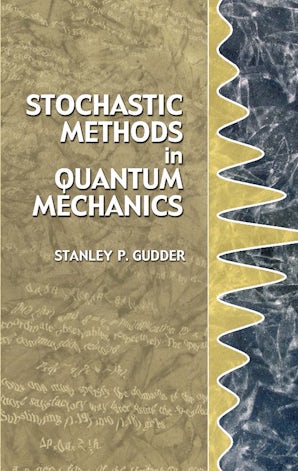
Practical developments in such fields as optical coherence, communication engineering, and laser technology have developed from the applications of stochastic methods. This introductory survey offers a broad view of some of the most useful stochastic methods and techniques in quantum physics, functional analysis, probability theory, communications, and electrical engineering. Starting with a history of quantum mechanics, it examines both the quantum logic approach and the operational approach, with explorations of random fields and quantum field theory.
The text assumes a basic knowledge of functional analysis; although some experience with probability theory and quantum mechanics is helpful, necessary ideas and results from these two disciplines are developed as needed. A selection of exercises follows each chapter, and proofs to most of the theorems are included. A comprehensive bibliography allows researchers and students to continue in the direction of their individual interests.
The text assumes a basic knowledge of functional analysis; although some experience with probability theory and quantum mechanics is helpful, necessary ideas and results from these two disciplines are developed as needed. A selection of exercises follows each chapter, and proofs to most of the theorems are included. A comprehensive bibliography allows researchers and students to continue in the direction of their individual interests.
$5.23
Original: $14.95
-65%Stochastic Methods in Quantum Mechanics—
$14.95
$5.23Product Information
Product Information
Shipping & Returns
Shipping & Returns
Description
Practical developments in such fields as optical coherence, communication engineering, and laser technology have developed from the applications of stochastic methods. This introductory survey offers a broad view of some of the most useful stochastic methods and techniques in quantum physics, functional analysis, probability theory, communications, and electrical engineering. Starting with a history of quantum mechanics, it examines both the quantum logic approach and the operational approach, with explorations of random fields and quantum field theory.
The text assumes a basic knowledge of functional analysis; although some experience with probability theory and quantum mechanics is helpful, necessary ideas and results from these two disciplines are developed as needed. A selection of exercises follows each chapter, and proofs to most of the theorems are included. A comprehensive bibliography allows researchers and students to continue in the direction of their individual interests.
The text assumes a basic knowledge of functional analysis; although some experience with probability theory and quantum mechanics is helpful, necessary ideas and results from these two disciplines are developed as needed. A selection of exercises follows each chapter, and proofs to most of the theorems are included. A comprehensive bibliography allows researchers and students to continue in the direction of their individual interests.